

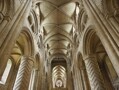
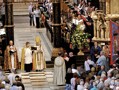
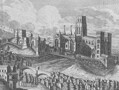


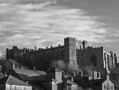

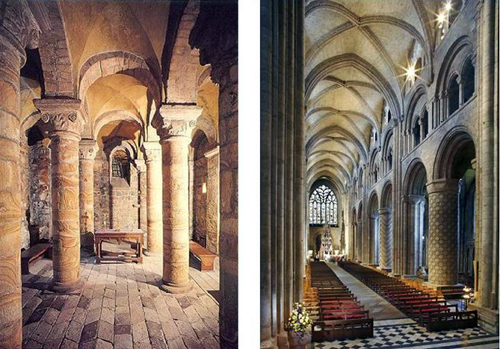
The Castle's Norman Chapel (above left), dating to around 1072, is Durham's oldest surviving building. It pre-dates the monumental vaulted Cathedral Nave (above right), renowned as a break-through in architectural technology, by around 20 years.
© Right-hand image: Durham Cathedral and Jarrold
Durham Cathedral and Castle were inscribed on the World Heritage List because of:
- The site’s exceptional architecture demonstrating architectural innovation
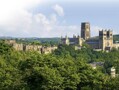
- The visual drama of the Cathedral and Castle on the peninsula and the associations of the site with notions of romantic beauty
- The site's role as a political statement as one of Britain's most powerful symbols of the Norman Conquest
- The physical expression of the spiritual and secular powers of the medieval Prince-Bishops that the defended complex provides
- The relics and material culture of the three saints (Cuthbert, Bede and Oswald) buried at the site, and the cultural and religious traditions and historical memories associated with them
- The importance of the site's archaeological remains, which are directly related to its history and use over time
- The continuity of use and ownership of the site as a place of religious worship, learning and residence over the past 1000 years